Occupation Icons: Practical Tools for Modern Design and Communication
Understanding Occupation Icons in Today’s Visual Landscape
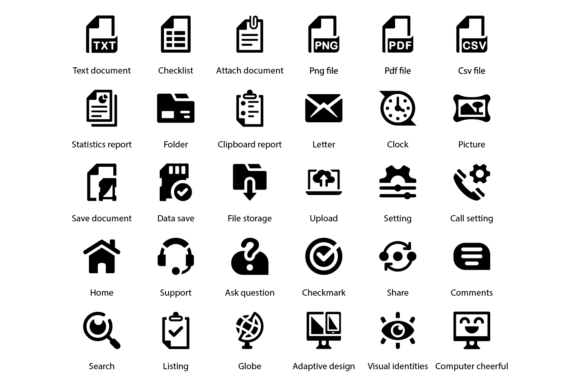
Occupation icons are simplified visual representations of different job types, careers, or professional roles. These icons serve as a universal shorthand, allowing designers, educators, and communicators to convey complex ideas about work and industry quickly and effectively. Whether you're designing a website, creating an infographic, or building a training module, an occupation icon can help clarify your message without the need for lengthy explanations.
Available in both EPS and JPG formats, these icons are easy to edit, resize, and integrate into a variety of digital and print projects. Their vector-based nature ensures they remain crisp and clear at any size, making them ideal for everything from mobile app interfaces to large-format posters.
Where Occupation Icons Shine: Real-World Applications
Let’s look at how different professionals and industries use occupation icons to improve communication, enhance user experience, and streamline design workflows.
1. Web Design and User Interfaces
Modern websites and web applications often rely on visual cues to guide users. Occupation icons help categorize content, label navigation menus, or highlight specific services. For example, a job board might use icons to represent industries like healthcare, engineering, or education, allowing job seekers to scan options more efficiently.
- Job portals use occupation icons to filter listings by profession
- E-learning platforms use them to indicate course categories
- Company websites use them to visually represent team roles
2. Infographics and Presentations
Infographics thrive on clarity and visual storytelling. Occupation icons can illustrate workforce trends, employment statistics, or career pathways. When explaining data like “Top 10 Jobs in 2025” or “Growth in Tech Employment,” icons help break down complex charts into digestible visuals.
- Highlight key job sectors in a labor market report
- Visualize career progression paths in a training slide deck
- Represent demographic data in a business proposal
3. Business Training and Educational Materials
From vocational training programs to corporate onboarding, occupation icons are invaluable in making learning materials more engaging. They can represent roles in organizational charts, illustrate team structures, or accompany job description templates.
For example, a leadership training module might use icons to differentiate between management roles, while a safety training course could use them to identify different job responsibilities on a construction site.
Who Benefits Most from Occupation Icons?
These icons aren’t just for designers—they’re useful across a wide range of fields and user types.
Designers and Developers
Graphic designers appreciate the flexibility and scalability of vector-based icons. Web developers value their ease of integration into responsive layouts. Whether you're building a SaaS dashboard or a mobile app, occupation icons help create intuitive interfaces that users understand at a glance.
Educators and Trainers
Teachers and trainers use occupation icons to simplify complex information. For instance, when explaining the structure of a business, an icon representing each department—marketing, finance, HR—can help learners grasp the roles faster than text alone.
HR and Recruitment Professionals
In job postings, career guides, and internal communications, HR teams use icons to visually categorize roles, making it easier for employees and applicants to navigate opportunities. A recruitment website might use occupation icons to segment job listings by industry, function, or experience level.
Entrepreneurs and Small Business Owners
For startups and small businesses, clear visual communication is essential. Occupation icons can be used in pitch decks, business plans, or marketing materials to represent team members, services offered, or target industries.
Choosing the Right Occupation Icon: What to Consider
While occupation icons are incredibly useful, selecting the right ones for your project requires some thought. Here are a few practical considerations to keep in mind:
Relevance and Recognition
Choose icons that clearly represent the profession or role they’re meant to symbolize. A wrench might be perfect for a mechanic, but less clear for a software developer. Opt for widely understood symbols to avoid confusion.
Consistency in Style
Icons should match the overall visual tone of your project. Whether you're going for a flat design, a minimalist look, or something more detailed, consistency in line weight, color palette, and style is key.
Scalability and Format
Vector formats like EPS ensure your icons remain sharp at any size. This is especially important for print materials or large displays. JPG versions are great for quick use in digital layouts, but may lose quality when scaled up.
Customization Needs
If you need to tweak colors or adjust details, vector files give you the most flexibility. Make sure the icons you choose are easy to edit in common design software like Adobe Illustrator or free tools like Inkscape.
Strengths and Limitations of Occupation Icons
Like any design element, occupation icons have their strengths—and their limitations.
Strengths
- Universal recognition: Well-designed icons transcend language barriers.
- Efficient communication: They convey meaning quickly without needing text.
- Design flexibility: Easy to integrate into various layouts and themes.
- Cross-platform compatibility: Work well in both digital and print environments.
Potential Limitations
- Misinterpretation: Some icons may not be clear without context or labels.
- Overuse: Too many icons can clutter a design and reduce their effectiveness.
- Limited nuance: Complex roles or hybrid jobs may not be easily represented by a single icon.
Final Thoughts: Making the Most of Occupation Icons
Occupation icons are more than just decorative elements—they’re powerful tools that enhance clarity, engagement, and usability across a wide range of applications. Whether you're building a website, designing training materials, or creating data visualizations, choosing the right icons can make your content more accessible and visually compelling.
With easy-to-edit formats like EPS and JPG, these icons offer both flexibility and scalability, making them a smart investment for any designer or communicator. Just remember to use them thoughtfully—consider the audience, context, and clarity to ensure your message comes through loud and clear.