Computer Hardware Icons: The Secret Weapon for Designers and Content Creators
Whether you're building a website, designing a presentation, or creating promotional material, visuals matter. One of the most effective ways to communicate technical ideas quickly and clearly is by using computer hardware icons. These small but mighty graphics help simplify complex concepts, guide users, and enhance the visual appeal of your projects.
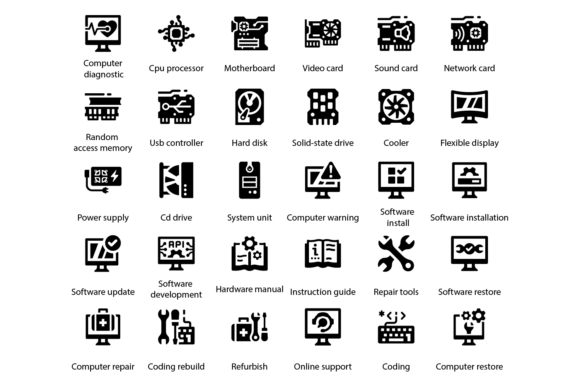
Computer hardware icons are meticulously designed visual representations of physical tech components—think hard drives, monitors, keyboards, printers, and more. When crafted well, they’re not just functional but also aesthetically pleasing. Whether you're a marketer, educator, developer, or small business owner, these icons can elevate your work in meaningful ways.
Why Computer Hardware Icons Matter in Modern Design
Icons are a universal language. They transcend text and help users understand functionality or content at a glance. In a world where attention spans are short, visuals like computer hardware icons allow you to deliver information efficiently.
For example, imagine you're creating a website that explains how to build a gaming PC. Instead of writing out “connect the graphics card” in every step, you can use a GPU icon to represent that step visually. This makes your content easier to scan and follow, especially for beginners who might be overwhelmed by technical jargon.
Similarly, in a presentation about IT infrastructure, using icons for servers, routers, and storage devices makes your slides more engaging and easier to digest. Audiences retain visual content better than blocks of text, and icons help you tap into that advantage.
Real-World Uses for Computer Hardware Icons
Let’s look at some practical applications across different fields and how computer hardware icons bring value to each:
- Website Design: Icons help users navigate. A printer icon in a support section tells visitors they can print the page. A USB port icon in a product feature list signals compatibility with external devices.
- Presentations: Educators and trainers can use icons to illustrate how different components work together in a computer system. This makes abstract ideas more tangible, especially for younger or less tech-savvy audiences.
- Promotional Materials: Marketing teams often use icons in flyers or digital ads to highlight product specs. A high-resolution monitor icon next to “4K Display” makes the feature more relatable and eye-catching.
- Infographics: Visual summaries of tech trends or hardware specs become more compelling with icons. They help break up dense information and guide the viewer’s eye through the content.
- Printed Guides and Manuals: Technical documentation becomes more user-friendly when icons are used to represent actions or components. This is especially useful for international audiences who may not speak the same language.
Who Benefits Most from Using Computer Hardware Icons?
These icons aren’t just for professional designers. Here are a few user groups who can make the most of them:
- Small Business Owners: If you run a tech repair shop or sell computer components, using icons in your website design or packaging helps customers understand your offerings quickly.
- Freelancers and Bloggers: Content creators can use icons to organize blog posts, tutorials, or YouTube thumbnails. For example, a video about laptop upgrades might feature icons for RAM, SSDs, and cooling fans in the thumbnail or description.
- Teachers and Trainers: In classrooms or online courses, icons help explain how computers work. They’re especially useful in e-learning modules where visuals aid retention.
- Startup Founders: Pitch decks and investor presentations become more polished when icons are used to represent product features or tech integrations.
- DIY Enthusiasts: Hobbyists building their own PCs or setting up home networks can create visual guides using icons to keep track of components and connections.
What to Look for When Choosing Computer Hardware Icons
Not all icon sets are created equal. Here are a few things to consider before you download or purchase:
- File Formats: Make sure the set includes AI, EPS, SVG, and transparent PNG files. This gives you flexibility whether you're editing in Illustrator, embedding in a website, or printing a poster.
- Consistency: All icons should share the same style, stroke width, and color palette. Inconsistent design can make your project look unprofessional.
- Scalability: Vector formats like SVG ensure icons look sharp at any size. This is crucial for both digital and print use.
- Relevance: Choose a set that includes the hardware you actually need. If you’re designing a presentation about cloud computing, you might not need a floppy disk icon, but a server or network icon will be essential.
How to Use Computer Hardware Icons Effectively
Just having icons isn’t enough—you need to use them smartly. Here are a few tips:
- Pair with Text: Don’t rely solely on icons to communicate meaning. Combine them with short labels or captions to avoid confusion.
- Keep It Simple: Too many icons can overwhelm your audience. Use them to highlight key points or actions, not to decorate every sentence.
- Test for Clarity: Show your design to someone unfamiliar with the topic and ask what the icons mean. If they struggle to interpret them, consider simplifying or labeling.
- Use Color Strategically: Stick to a limited color palette that matches your brand or design theme. You can highlight important icons with a contrasting color to draw attention.
Final Thoughts: Icons Are More Than Decoration
Computer hardware icons are a powerful tool for anyone who communicates through visuals. Whether you're designing a tech blog, building a product catalog, or explaining how a motherboard works, the right icons can make your content more engaging, easier to understand, and more professional-looking.
When you invest in a quality set of icons, you're not just getting images—you're getting a toolkit that helps you connect with your audience more effectively. And with formats like AI, EPS, SVG, and transparent PNG included, you’ll have everything you need to use them across any project, digital or print.
So next time you’re working on a design or presentation, don’t overlook the power of a well-placed icon. It might just be the difference between good content and great communication.